The unifying principle when designing The Meidlands TTRPG was to increase meaningful choice and agency.
The dice mechanics were created to provide simple but meaningful mechanical gradation while giving the player the ability to steer the outcome of pool and critical dice. Each of the 12 player character classes (and 2 NPC/monster classes), were designed to conform to the broad archetype, but provide latitude on how that individual built and differentiated over character development. All checks are built around 6 attributes, 14 skills, and 68 specialities within those skills, which allow to ever-broadening narrative approaches that remain valid for play, in contrast where everything is ancillary to combat. Hell, the mountebank player class and the NPC citizen class have no inbuilt ability or advancement in melee, ranged, or magical combat. But in a world where the threats can be far beyond the abilities of the average mortal adventurer, relying solely on steel and spell can be self-defeating.
Similarly, having a standard array of caster classes all casting more or less the same kind of magic, with thematic partitions in between, while familiar, is limiting. Maybe a wizard’s spellcasting should feel distinct from a cleric’s. Maybe a witch and a wizard, naturally approach the casting and execution of arcane spells in completely different ways, so that even when they can somewhat emulate the other, they do best with their own approach. So in the end, there are over 1000 spells, Over 50 different arcane specialized niches, a broad set of interconnecting divine spell lists, all applicable and remix-able within 6 casting specialities across two skills (Spellcasting for rotes, Spellcraft for countering and improvising, Enchanting for crafting, Channeling for divine rites, Divine Will for mystical embodiment and wonder-working, and Vision for dreams and prophecy).
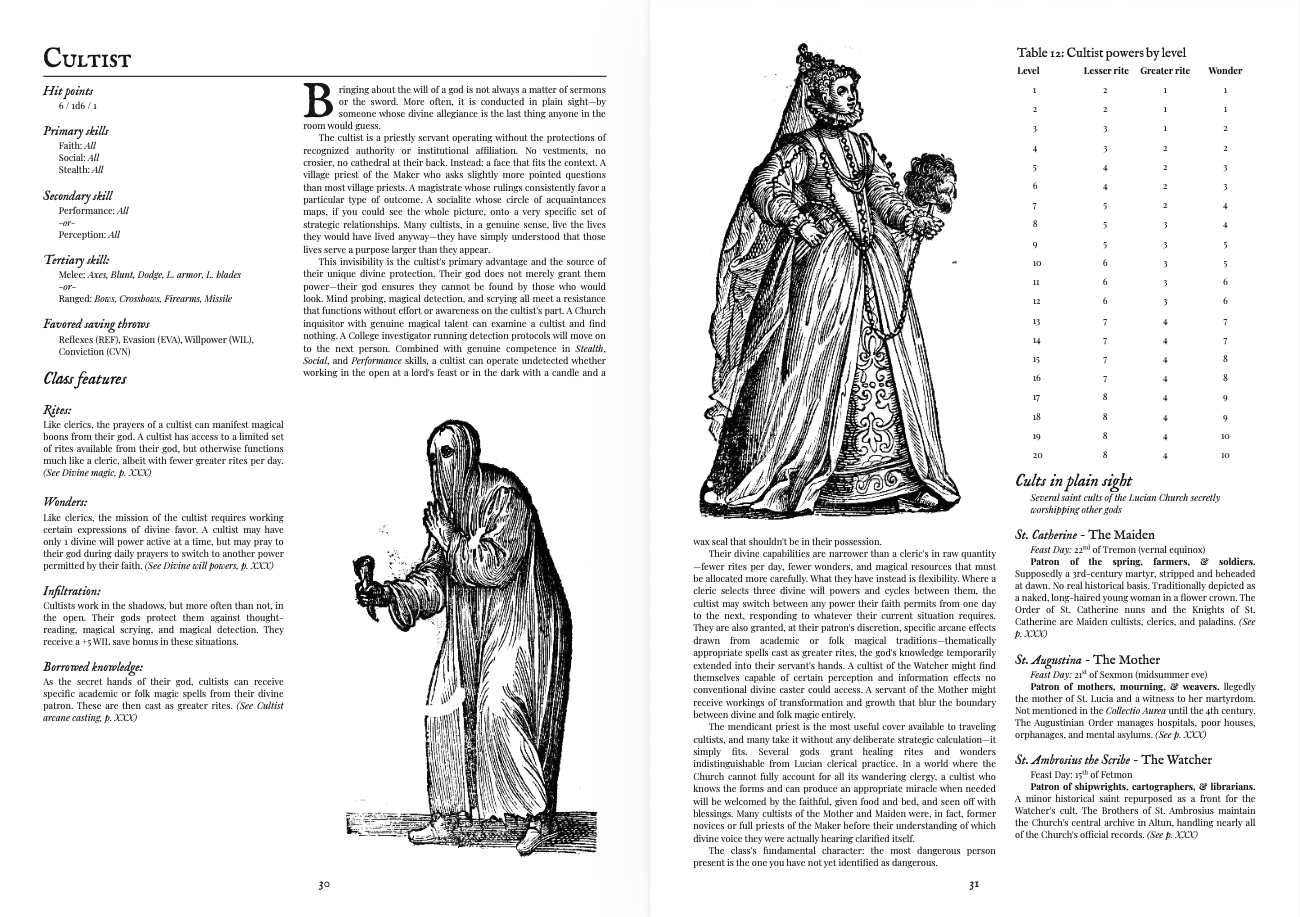
Want magic but not going for a wizard, witch or cleric? How about narrowing your focus (but not power) and leverage these skills in full arms and armor as a battlemage? Paladin too normal for a cleric-adjacent option? How about the cultist class, which combines stealth, manipulation, and infiltration with flexible divine casting abilities?
Is ranger just a less good fighter with a tracking skill and a bow in your system? How about a ranger who is a dedicated monster hunter, who learns from hunting and enhances their allies, seeking more to deciding the outcome of the fight well before the first blade is drawn or shot fired?
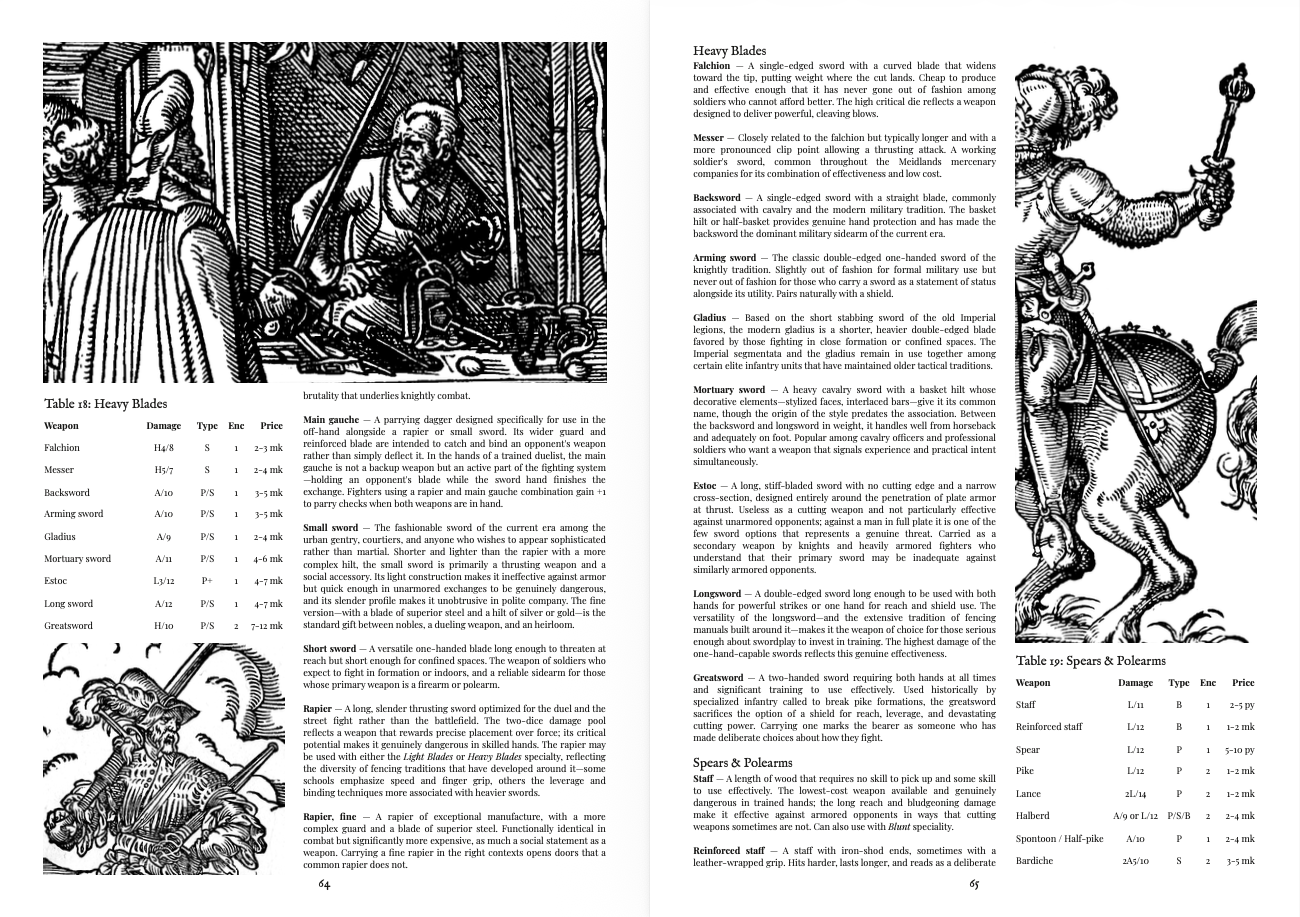
Armor and weapons designed to function and feel different. Defensive actions (and associated skill specialties) that perform in meaningfully different ways. Similar spell effects in different arcane schools that approach the problem in vastly different ways, diegetically, which result in slightly different tools.
So over 5 years ago, The Meidlands started as an OSR hack, but quickly changed scope to a nearly complete rewrite of what a “traditional” class-based, fantasy TTRPG could be.
Could there be more agency? More choice? More elegant resolution mechanics that avoid too much in-head math or charts? Could combat be restructured so the players play as a team? Can the action economy be reworked so that risk/reward decisions are woven into effective situation management? Could the players make use of an “alignment” mechanic that both describes realistic motivations (not good/evil, law/chaos, per se, but fame, wealth, duty, pleasure seeking, devotion, care for one’s friends and family, etc.) and provides a framework to tie advancement to motivate adventuring and roleplay driven by the character’s inner life?
Yes. I said yes to all of these things and more.
The end product tends to feel entirely modern but carry the sensibilities of late 80s/early 90s editions of the game. There are the classic 6 ability scores, but they are reduced to their penalty/bonus level, since only used in that form. There are 6 saving throws, but they are derived not just from level and class, but also from ability scores and selected skills. There are critical hits, but there are a few flavors: max. damage on doubles on critical dice (7/36 before any reroll mechanic), max. damage with an extra success and reroll of both on a 6-6 (1/36), or fierce strike when getting 3+ successes, granting a 3rd critical die and picking 2 (which of course result in doubles or 6-6).
Fighters fight and wizards wizard, and so on, but there are no need for kits or subclasses, since taking background, free or non-class skills can shift capabilities and although the three primary skills are fixed per class, the secondary and tertiary skills provide variation. Are you a mace and shield, armored battle chaplain of a cleric or a social, beer-brewing friar, who dabbles in herbal lore, medicine and alchemy? Are you a generalist magus, or a specialist, or an enchanter, or scholar, or arcane marksman as a wizard? Don’t want to go full divine caster, but be a person of strong faith with a small gift for divine healing? Maybe you want to be a ranger, but one driven by faith to stay undead and hunt vampires and other returned, all while wielding the wonder of turning undead? A thief who learned a little folk magic from her witch grandmother? A barbarian who is a little more than a little shaman, with faith and herbcraft? All of these are legitimate concepts at level 1.
The design was not limited to the game aspects. It needed to, in spite of magic and monsters, have a real historical groundedness. Weapons and armor should make sense. Societal structures, region, myth, magic, and common monsters should feel like they belong and have a logic. Because otherwise, the absolute reality violations of the real horror elements wouldn’t seem as horrific.
Some of this reflects back into the mechanics. Lots of hard travel and hard combat (and some types of magic) can add levels of fatigue to the character, each giving a -1 penalty to basically all checks. This can add up with long days, late nights, poor sleep and camping conditions, so pausing at the tavern with a clay pipe and an ale when getting to town may help put the party in better position to investigate horrors. Likewise, being interrupted in the night means not only dealing with whatever is out there in the dark, but probably not being as rested as you’d like.
The setting and world building was a result of not only years of craft, but much historical study.
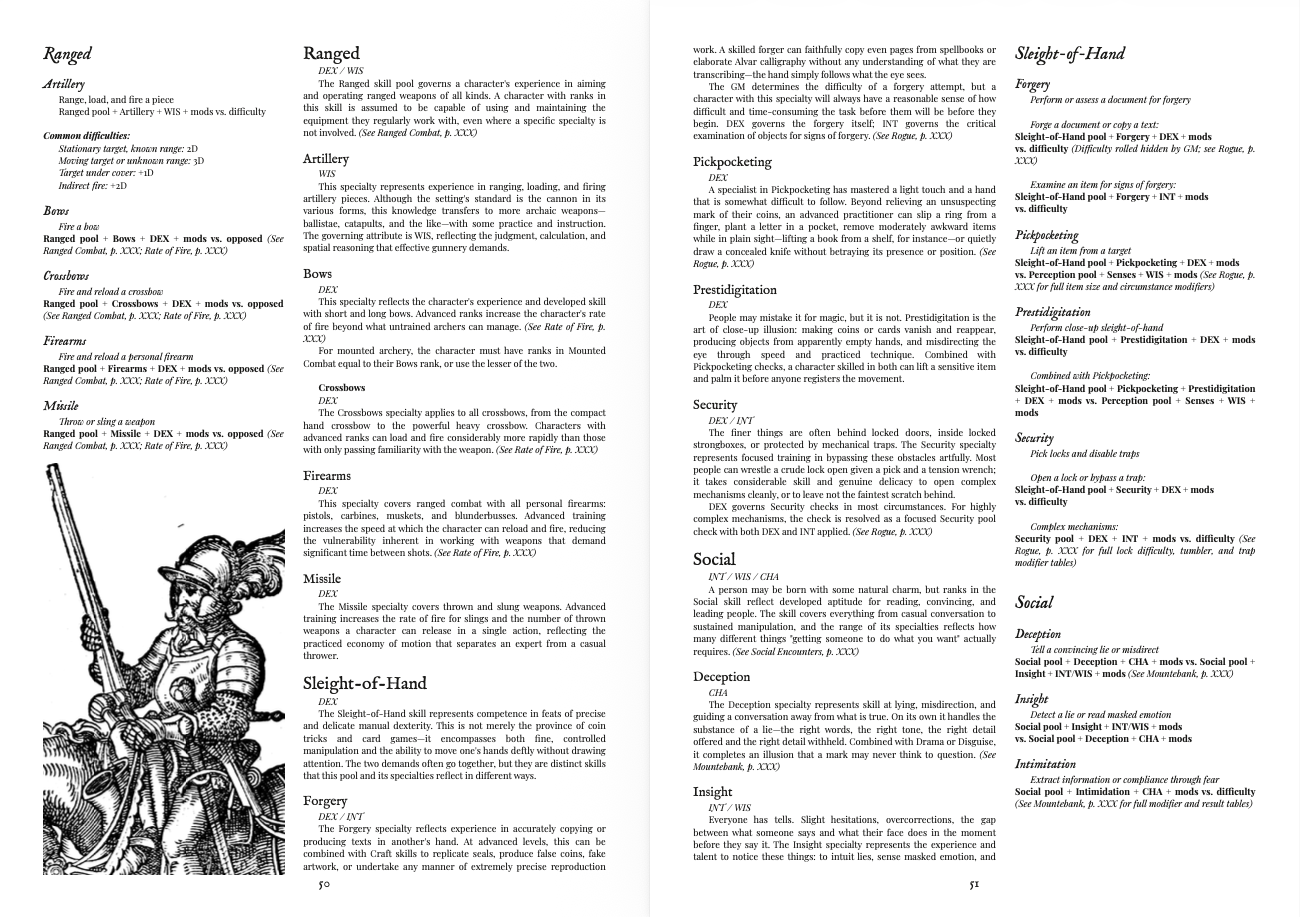
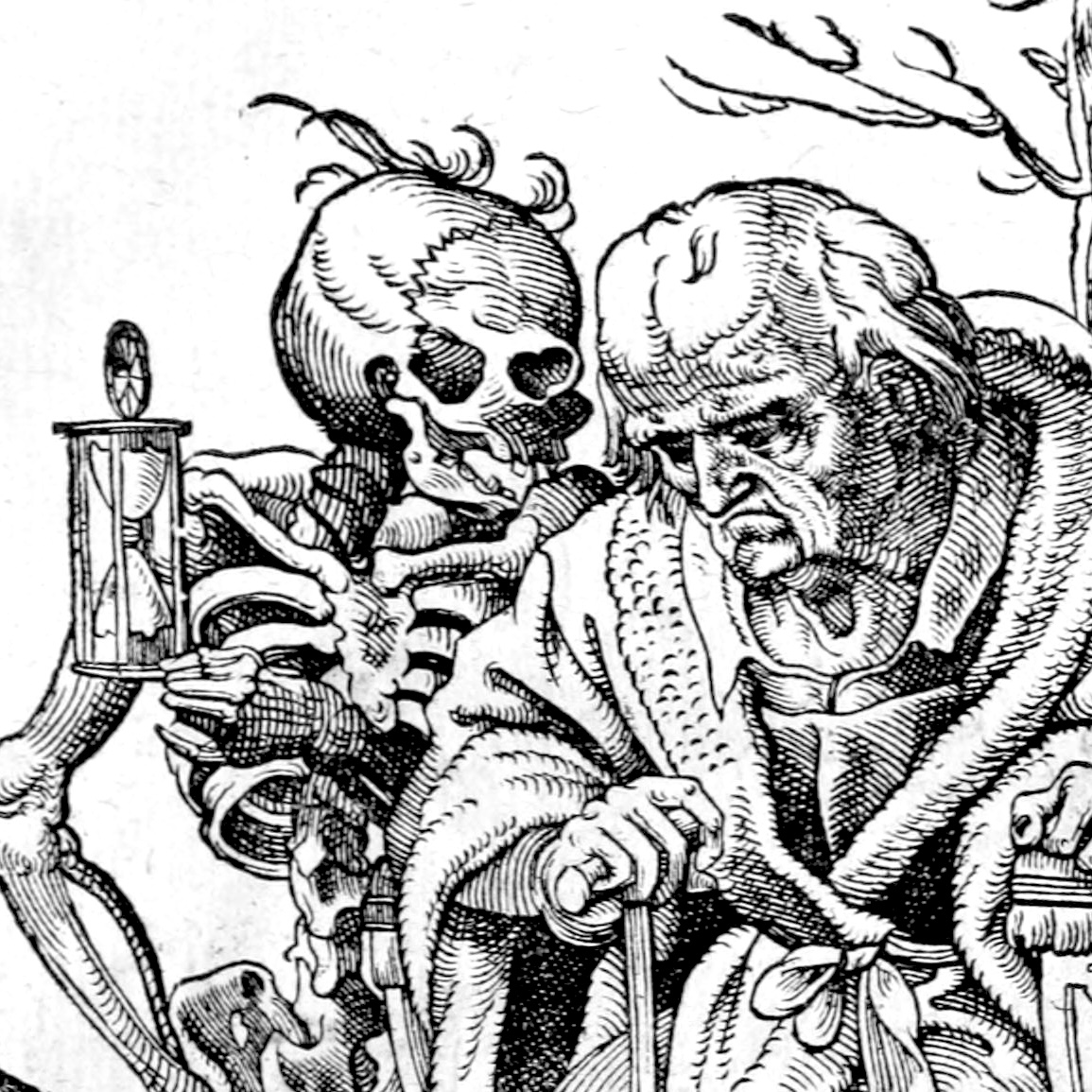
In addition to the historical grounding and plausibility of the world, the visual design is based around 16th and 17th printed books. All the illustrations come from early printed woodcuts and engravings and the typeset is a recreation of the Fell typefaces. Much of the book is laid out with a wide outer margin, often used for glosses, but here employed for tables and quick reference summaries of rules or calculations.
Even though it isn’t strictly authentic to what a TTRPG published in the early to mid 1600s would look like, it invokes this in a lot of ways without detracting from its modern use as a game reference book.
Below are screenshots of draft versions of several spreads, to give a sense of the design sensibilities of this work.